Pérou – Histoire d’extrêmes

Scroll down for the English version
Cela a commencé à Lima, avec les chapelets suspendus aux rétroviseurs des taxis. Cela a continué dans les boutiques, avec les croix présentées comme des décorations de salons. Et ensuite, pendant tout le voyage… A l’Hôtel Monasterio de Cuzco, un ancien monastère reconverti à l’hôtel, où une messe a été célébrée un jour dans la fantastique chapelle au rez-de-chaussée, toute croulante d’or. Dans les rues, avec les processions, les danses et les défilés incroyables. Dans les musées remplis d’images saintes, et jusque dans la gastronomie qui remonte à l’époque coloniale et aux périodes sacrées. Cela m’a fait penser à tous les mélanges sud-américains, à la religion qui rejoint la vie, qui influence chaque moment, qui est une manière d’être et de s’exprimer. Aux extrêmes. A ma mère écossaise venue d’un pays protestant et à mon père sud-américain. Aux différences fondamentales entre l’Europe et l’Amérique Latine. Chaque instant ici est en totale contradiction avec ce qui se vit généralement en Europe. Ici, la religion est extravertie, excessive, se montre et s’exprime dehors, est colorée, riche, pleine de fantaisie. En Europe, dans la plupart des pays, les gens n’en parlent pas, voient ça comme une affaire privée, font leurs prières presque en cachette, ne la glorifient pas. Cela vient-il du soleil, du climat ? Ma mère dit que oui, en partie. Elle m’a fait remarquer que les pays protestants sont généralement des pays gris et froid, où les mentalités et les croyances sont aussi austères que les paysages. Du côté de mon père, c’est tout le contraire. Chez lui, la religion fait partie de la vie. Est-ce mieux de montrer ou de cacher ? Le Soleil ou le froid ? L’extraverti ou le privé ? Mmm, pourquoi choisir quand chaque extrême a quelque chose à offrir à l’autre…

Peru – A story of extremes

It started in Lima with the rosaries draped around the driver’s mirror in the taxis. Then in the shops, where the crucifixes are displayed like objets d’art in a drawing-room. And so on, during the whole journey…… At the Monesterio de Cuzco, an ancient Spanish monestry reconverted into an hotel, where mass was celebrated one day in the splendid, gold laden ground floor chapel. In the streets, with incredible processions, dancers, parades. In the museums, filled with paintings and statues of saints. And even in the cuisine, which goes back to the colonial epoch and held to the holy calendar. It made me think of all that is intermingled in the south-american culture, of religion that is part of daily life, that can influence any moment, that is a way of being and of expression of the extremes. Of my scottish mother, educated in a protestant country, and of my south-american father. Of such fundamental differences between Europe and South America. Every moment here is in total contadiction to the customary life in Europe. Here religion is extrovert, extravagant worn and expressed liberally, it is colourful, rich and full of fantasy. In most countries of Europe people speak little of their religion, considering it a private matter to assume humby without outwardly glorifying it.Does this attitude come from the sun? the climate? My mother certainly believes that this is parcially true. She reminded me that the protestant countries have mostly cold, grey, rainy climates, long winters, and where the mentalities and beliefs are often as austere as the landscapes. On my father’s side , it is all the contrary.For him religion is a joyous fact of life.Is it better to blazon it or to restrain it? The sun, or the cloud? Outgoing or personal? Mmmm, why choose, when each extreme has something to offer the other…

Posted in Life, Travel | Tagged , , , | Commentaires fermés

Fierté latina

Scroll down for the English version

L’autre jour ma soeur m’a envoyé cette photo qu’elle a prise dans le métro à Paris. Elle avait écrit en dessous « Viva Chile ! ». Cela m’a fait penser à nos premières années en France…

A l’époque, peu de gens savaient où se trouvait le Chili, quelle langue nous parlions, comment nous vivions. Chaque jour, nous lisions des articles dans les journaux qui ahurissaient ma famille, nous entendions des gens sérieux, des gens importants, parler de choses qu’ils ne connaissaient pas, qui n’avaient rien à voir avec le pays que nous aimions. Ces années m’ont appris à défendre mes opinions – pour rectifier ce que je savais être faux. Elles m’ont appris aussi d’où je venais. Avant, cela n’avait pas vraiment d’importance. Mais quand vous êtes isolé et perdu, que la vie devient incontrôlable, vous vous raccrochez à ce que vous connaissez, et vos racines font partie de ces choses là.

Les événements ont rendu le Chili célèbre. Le temps a passé. Les choses n’ont été faciles ni simples pour aucun chilien. Et puis, le pays a évolué, d’une manière inespérée. D’autres pays auraient été broyés par une histoire comme la nôtre. Le Chili a réussi à repartir, malgré tout ce qu’’il avait contre lui. Son passé, sa géographie impossible, son isolement absolu, la dureté de la vie et des éléments. Pendant ces années là, j’ai appris autre chose. Que les pays et les nations sont comme les gens. Que la roue tourne pour tout le monde. Que les faibles d’hier peuvent être les forts de demain et vice versa. Qu’il faut faire attention à ne pas être condescendant, arrogant, dénigrant, parce qu’’on ne sait jamais ce qui peut arriver dans la vie.

Je suis fière de voir que le Chili avance bien. Que les nations latinas seront, certainement, les nations fortes de demain.

Cette année, le Chili a été nommé Best trip 2013 par le National Geographic Traveler.
Le chef Rodolfo Guzman de 34 ans a été élu nouvelle star de la cuisine internationale par le Nouvel Observateur (et que dire des vins chiliens qui rivalisent aujourd’hui avec les français).
L’hôtel Tierra Patagonia, au fin fond des Torres del Paine, a reçu le Design Award de Travel & Leisure.
En 2013, Santiago va inaugurer la plus haute tour d’Amérique du Sud, La Gran Torre Santiago.
En 2012, The Times a fait pour la première fois de son histoire sa couverture avec un titre en espagnol.

Latin Pride

The other day, my sister sent me this picture she took in the Parisian subway. She had commented it: « Viva Chile! » This reminded me of our first years in France…

Back then, only a few people knew where Chile was, which language we spoke, how we lived. Everyday we heard serious people, important people, speak of things they didn’t know of and that had nothing to do with the country we loved. These years taught me how to stand up for my beliefs – to correct what I knew was wrong. These also taught me where I came from. Before that, I wasn’t really aware of it. But when you are lost, and things spin out of control, you hold on to what you know, such as your roots.

The events which made Chile famous. This was not easy or simple for any Chilean. Time passed, and the country evolved in a way undreamed-of. Other countries would have been crushed by a History like ours. Chile managed to get going again, slowly, despite of eveything working against it. Its past, the geographic situation, the absolute isolation, the toughness of life and elements. During those years, I learnt something else. That the countries and nations are like people. That the wheel of life rotates for everyone. The weak of yesterday can be the strong ones of tomorrow and vice versa. One must be careful not to be condescending, arrogant, denigrating, because one never knows what happens in life.

I am proud to see that Chile progresses well. That Latina nations will become, withouth a doubt, the strong nations of tomorrow.

This year, Chile was named Best trip 2013 by the National Geographic Traveler.
The 34 years old chef Rodolfo Guzman was named the new star of international cuisine by Le Nouvel Observateur (and what about the Chilean wines that today compete with the French).
The hotel Tierra Patagonia, at the far end of Torres del Paine, received the Design Award of Travel & Leisure.
In 2013, Santiago will inaugurate the highest tower in South America, the Gran Torre Santiago.
In 2012 and for the first time, The Times did its cover story with a Spanish title.

Posted in For English speakers, Life | Tagged , | Commentaires fermés

On the road

Scroll down for the English version

Voyager, c’est tellement plus que d’aller d’un point à un autre. Tellement plus que voir des choses et faire des choses. Ce sont aussi les « entre deux », les moments de flottements, les instants qui n’appartiennent à rien de précis, où on a quitté le passé et où on n’est pas encore entré dans l’avenir. Comme les moments sur la route… de préférence au milieu d’un grand, d’un immense espace. Vous êtes injoignable. Le portable, l’ordinateur, les gens que vous ne voulez pas voir, n’existent plus. On peut profiter des secondes qui s’écoulent, s’offrir le luxe d’être joyeux, insouciant, stupide, de regarder seulement le ciel et les arbres pendant des heures, de rêver et faire tout ce qu’on en fait pas pendant l’année, qui vide la tête et rend léger. La vie paraît soudain simple, droite, ouverte à l’infini. Comme on aimerait qu’elle soit. Avec nous, avançant à notre rythme pour aller vers un point inconnu, un sourire aux lèvres, et le vent dans les cheveux.

Alors, partez sur une route cet été !

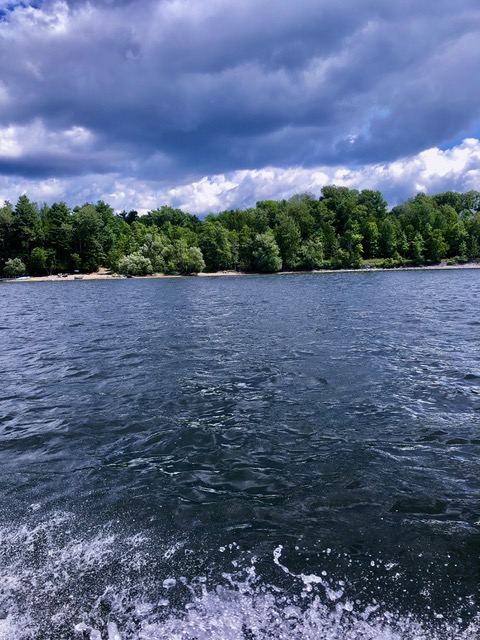
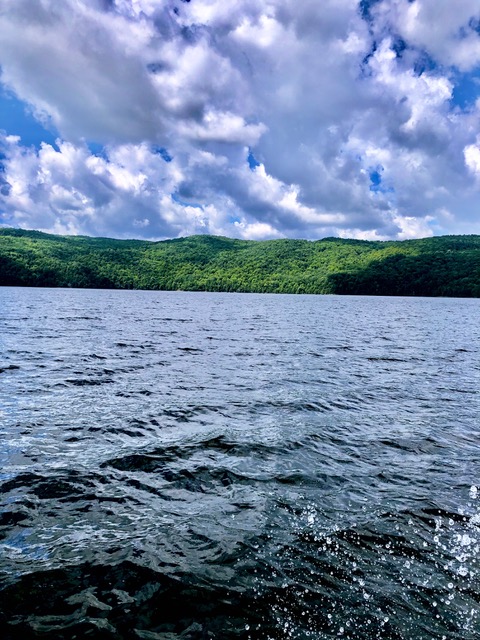
PS : Avez-vous deviné d’où viennent ces paysages ? Pour en savoir plus, allez voir ici, et ici, et ici, et ici

To travel is more than going from point A to point B. It is so much more than seeing and doing things. What also matters are the moments « in between », the wavering, the instants that belong to nothing in particuliar, when the past was left behind and the future has yet to be met. As the times on the road… in preference in the middle of a vast, huge space. You are not contactable. Your cellphone, computer, people you didn’t want to see… These do not exist anymore. You can enjoy seconds passing by, open yourself to the luxury of being happy, carefree, stupid, only watching the sky and the trees for hours, dream and do whatever you cannot do during the year, which empties your mind and makes you feel lighter. Life suddenly seems simple, straight, open to infinity. As you wish it was. With us, moving forward at our own rythm towards an unknown destination, a smile on our face, and the wind in our hair.

So go on the road this Summer!

P.S.: Have you ever guessed whered those landscapes where taken from? To know more, go here, and here, and here, and here

Posted in Adventure, For English speakers, Life, Travel | Commentaires fermés

Paris – Nuit du Livre

Je suis heureuse de partager avec vous le Prix Livre d’Art que je viens de recevoir pour « Escales autour du Monde » lors de la 11ème édition de la Nuit du Livre.

I am happy to share with you the Art Book Prize I just received for « World Tour » during the 11th Nuit du Livre, an annual party held under the patronage of the French Minister of Culture to reward the best art books.

Posted in For English speakers, News | Tagged , , | Commentaires fermés

Paris – Morning, in a café

Every morning, when I am in Paris, I go downstairs to the café for breakfast, always sitting at the bar with the same regulars who, strangely, always occupy the same places. If when they arrive someone is already there, the owner just sets down their usual order at the accustomed place at the counter and they squeeze between the bodies to get to it.

The hairdresser always sits at the left end of the counter. He bought the hairdressing salon where he used to work (his former employer still lives in the same building in the flat above the salon). He could be mistaken for a college student, generally dressed in blue jeans and a Tshirt and above all speaks in a certain way….. It is not easy to differenciate between what is slang and what is invented. Each time he opens his mouth I wonder what he’ll come out with, and when he has quite finished I start thinking that I must have become a true Parisienne because I managed to understand every word. He likes to talk soccer with the chemist who came to France from Martinique and sits next to him.They compare notes about soccer and political scandals, particularly if these have made the front page of the Parisien (which the establishment kindly makes available for free to its customers).

Beside the chemist sits a young man who dabbles in the stock market. He likes to speak with them, whatever the subject, and always has a coffee, two croissants and an orange juice, then ten minutes later – surely carried away by enthusiasm- has another coffee and a pain au chocolat. He certainly doesn’t seem obsessed by health issues. Later on the three Serbian ladies who work in the jewelry store across the street come in, speaking their own language. I believe they must be happy being able to speak their mother tongue. They always seem glad to meet together. Then the owner of the algerian restaurant often comes by to have his expresso with a frown. His restaurant is famous and every evening he stands outside, full of energy, puting on a show for the tourists. Perhaps that is why he doesn’t feel like talking in the morning. Then there’s me and later on the mason. Gaston the café owner and he discovered Paris when they were seventeen. Gaston in 1961 when he arrived from his native Auvergne. He started working in another café near la place de la Bastille. Then his former boss helped him to open his own establishment. He is always happy because, he says, « it’s in my bones ». He can talk with anyone on any subject but also knows how to keep silent. He is a born diplomat. The mason arrived in 1970. They both left their familial farms because it seemed « obvious » that there would not be enough work for them there as they both came from large families. They didn’t know a thing when they arrived to Paris where they were met and welcomed by their clan, as they like to call it themselves, smiling. The bistrotiers from Auvergne and the masons from Corréze.

They talk of a Paris that no longer exists, of buses with platforms, of an epoque when all you needed to do was arrive from your hometown to be welcomed and found work by someone from your region. They talk of the present situation and what they hope to leave for their children. And all this costs me just 3 euro 30 …

Posted in For English speakers, Life | Tagged , | Commentaires fermés